
The short answer
What Houston homeowners should know first
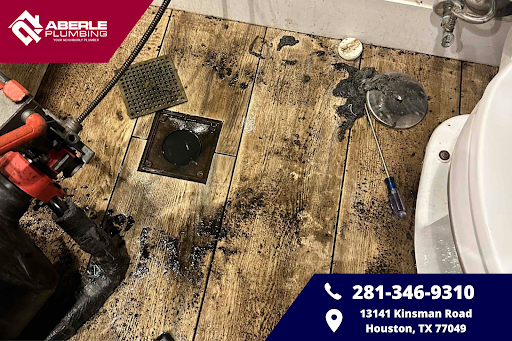
Common sewer-backup warnings include several fixtures draining slowly, toilets gurgling, water appearing in a lower drain when another fixture runs, and sewage odor with rising wastewater. Stop using water, keep people and pets away, avoid electrical hazards, and request diagnosis. Cleaning, repair, and utility involvement depend on the blockage location and cause.
The pattern matters more than one symptom
A single slow sink can be local. A toilet, tub, and floor drain reacting together points toward a shared branch or main line. The lowest fixture often shows the problem first because wastewater takes the easiest available path.
Do not keep flushing or running water to “test” a system that is already backing up. Each additional gallon may enter the building.
Warning signs
- bubbles or gurgling in a toilet when a sink, tub, or washer drains;
- more than one fixture becoming slow at the same time;
- water rising from a tub, shower, or floor drain;
- sewage odor combined with drainage changes;
- a cleanout releasing wastewater; or
- repeated blockage after a recent clearing.
An odor by itself can come from a dry trap or vent issue. A backup by itself does not prove the pipe is collapsed. Diagnosis connects the symptom to the cause.
Safe first actions
- Stop using toilets, sinks, showers, washing machines, and dishwashers.
- Keep children and pets out of the affected area.
- Avoid contact with wastewater; do not use a household vacuum.
- Stay away from outlets, appliances, or wiring exposed to water.
- Photograph the initial condition from a safe location.
- Contact a qualified plumber and, if advised, the wastewater utility.
Ready.gov warns that floodwater can contain sewage and other hazards. Cleanup scope should reflect contamination, affected materials, and local health guidance—not simply whether visible water was removed.
What can cause a backup
| Cause | How it is usually distinguished |
|---|---|
| Local accumulation or foreign object | Fixture/branch pattern and cleaning result |
| Grease or heavy organic buildup | Inspection plus material removed during cleaning |
| Roots | Camera evidence after access/cleaning permits a view |
| Offset, break, belly, or collapse | Camera location, depth, and condition; sometimes further locating |
| Overloaded or blocked public main | Neighbor/utility pattern and utility confirmation |
| Rain or inflow-related condition | Timing, system type, property drainage, and utility investigation |
Cleaning versus repair
Cleaning restores flow by removing an obstruction. Repair corrects a physical defect. A plumber may need to establish access and clear the line before a camera can see pipe walls. A post-cleaning camera record is useful when symptoms recur or a structural issue is suspected.
Aberle's water and sewer line repair service explains repair options. A video camera pipe inspection may support diagnosis.
Before excavation
Texas 811 instructs excavators to contact 811 at least two business days before digging, excluding weekends and holidays. Utility locating does not replace diagnosis, permitting, or determining ownership of the affected line. No homeowner should excavate a suspected sewer problem based on an article.
Questions to ask after flow is restored
- What was removed or observed?
- Was the entire affected run evaluated?
- Is there camera footage with distance/location information?
- Does the evidence show a structural defect or only an obstruction?
- What maintenance, repair, or monitoring is recommended—and why?
- Which portion of the line is privately owned?
Primary references
Sources used for this guide
Common questions
Questions Houston homeowners ask
What are common warning signs of a sewer backup?
Multiple slow fixtures, gurgling, sewage odor, water appearing at a lower drain, or a backup when another fixture runs can point to a shared drain or sewer problem.
Should I keep using water during a backup?
No. Stop avoidable water use so more wastewater is not sent toward the restriction, and keep people and pets away from contaminated areas.
Does a camera inspection always show the cause?
A camera can document visible pipe conditions, but standing water, debris, access, and line geometry can limit what is seen. Cleaning, locating, or additional testing may be needed.