
The short answer
What Houston homeowners should know first
For a minor slow sink or shower, start with low-risk steps: stop using the fixture, remove visible debris from an accessible stopper or screen, and use a correctly sized manual plunger if the setup allows. Never mix cleaners. Stop DIY work when water is fully blocked, several fixtures react, or the clog returns.
Diagnose the scope before choosing a method
A single slow fixture usually points to a local area. Multiple affected fixtures, toilet gurgling, or water rising in a lower drain can indicate a shared branch or main-line problem. In that case, more water and more plunging may increase the mess.
Ask three questions:
- Is only one fixture affected?
- Is water moving slowly, or not at all?
- Has the same problem returned after a prior clearing?
If the answers are “several,” “not at all,” or “yes,” move from DIY clearing to diagnosis.
Low-risk steps for a localized slow drain
1. Remove visible debris
With the fixture out of use, remove hair or residue that is visibly caught on an accessible screen or removable stopper. Wear gloves, keep tools away from the drain if they can be dropped, and do not force or break an unfamiliar mechanism.
2. Clean the screen or stopper
Wash the removable part according to its material and reinstall it correctly. Run only enough water to confirm whether flow improved.
3. Use a fixture-appropriate plunger
A sink/cup plunger and a toilet/flange plunger are shaped differently. Seal the overflow where appropriate, use controlled strokes, and stop if pressure causes leakage at another connection. Never plunge a drain containing a chemical cleaner; splashing can cause exposure.
4. Check an accessible trap only if competent
A removable sink trap may contain the obstruction, but opening it releases water and can damage seals or finishes. If you cannot identify, contain, clean, and correctly reseal the assembly, leave it to a plumber.
| Method | Appropriate for | Stop when |
|---|---|---|
| Remove stopper debris | Visible local hair/residue | Part is stuck or unfamiliar |
| Manual plunger | Simple localized obstruction with no chemical present | Another fixture reacts or connection leaks |
| Trap inspection | Accessible sink trap and competent homeowner | Corrosion, damage, chemical, or uncertain reassembly |
| Product treatment | Only a label-approved, understood use | Complete blockage, mixed products, or repeat symptom |
Methods to avoid
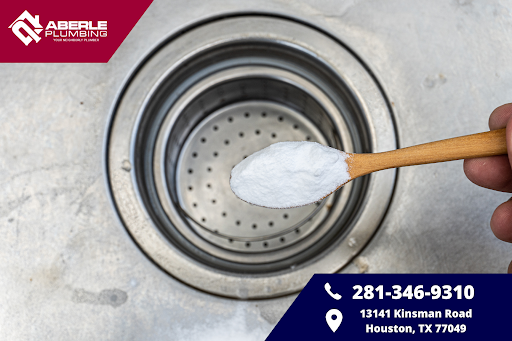
- Do not mix baking mixtures with commercial drain products.
- Do not combine bleach, acid, ammonia, caustic cleaner, or separate drain openers.
- Do not pour boiling water into a fixture without knowing the material and product guidance.
- Do not push an improvised sharp object into the drain.
- Do not rent powered equipment without training, correct access, and an understanding of the pipe condition.
Poison Control warns that drain cleaners can be corrosive and cause serious burns. If a product is already in the drain, keep people away and tell the plumber what was used.
When to call a plumber
Request diagnosis for a complete blockage, repeated clog, several affected fixtures, sewage, a suspected foreign object, leakage around the trap, or a line that cannot be safely accessed. Aberle's professional drain-cleaning service covers broader drain problems. The clogged-drain repair page supports a localized obstruction.
For chemical-cleaner risks, see the Drano and Liquid-Plumr safety guide.
Primary references
Sources used for this guide
Common questions
Questions Houston homeowners ask
Is boiling water safe for every drain?
No. Very hot water can affect some materials, seals, and fixtures, and it does not remove every kind of blockage. Use fixture- and material-appropriate methods.
Will baking soda and vinegar clear a serious clog?
The reaction may loosen light residue, but it is not a reliable solution for a solid obstruction, grease mass, roots, or a damaged line.
When should DIY drain cleaning stop?
Stop for multiple affected fixtures, recurring clogs, a complete blockage, sewage, unusual noises, leaks, or any chemical already in the drain.