
The short answer
What Houston homeowners should know first
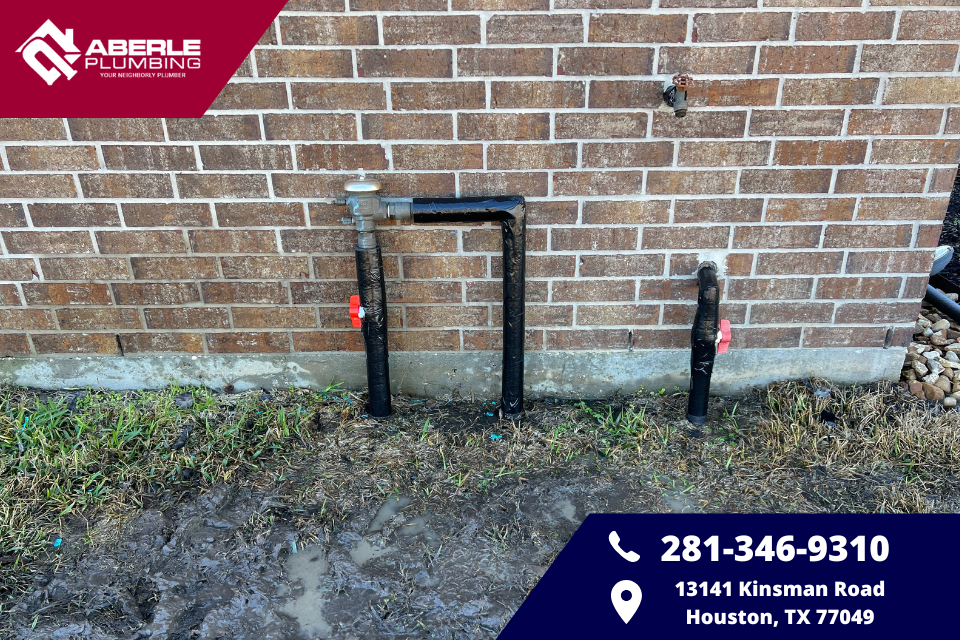
Your main water shutoff is usually where the private supply enters the home or near the meter, but the location and valve type vary. Trace the cold-water service line, check accessible perimeter and utility areas, and label the confirmed valve. Do not force a corroded valve or enter a flooded, electrically unsafe space.
Why finding it before a leak matters
Minutes matter when a supply pipe breaks. A known, working, labeled shutoff lets a homeowner limit water damage while qualified help is arranged. Searching for it during an emergency is slower, and an old valve that has not moved in years may not close fully.
Make locating and testing the shutoff a planned maintenance task—not an experiment during a flood.
Common places to look
The arrangement depends on the property. Begin at the water meter or where the service line approaches the building, then look for an accessible valve:
- on an exterior wall or in a protected box near the entry point;
- in a garage, utility room, mechanical closet, or basement area;
- near a water heater, but only if the piping clearly identifies it as the building supply rather than the heater's local valve; or
- in a meter box or utility easement, subject to local ownership and access rules.
Do not assume every valve near a meter is customer-operated. Utility-side valves and specialized meter stops may require the water provider.
Identify the correct valve
Ball valve
A lever handle is usually parallel to the pipe when open and perpendicular when closed. This is a general visual rule; confirm the actual piping and valve.
Gate-style valve
A round handle typically turns clockwise to close. Older valves can seize, leak at the stem, or fail internally. Do not apply excessive force.
Fixture shutoff
A valve below a sink or toilet controls only that fixture. A valve on the cold inlet to a water heater does not shut off all water to the home.
| Check | Why it matters |
|---|---|
| Trace the supply line | Prevents confusing a local valve with the main |
| Photograph and label the valve | Helps everyone find it quickly |
| Keep access clear | A hidden valve is not useful in an emergency |
| Verify operation during a planned visit | Finds a failing valve before a crisis |
| Note utility contact information | Provides a fallback if the private valve fails |
A safe planned test
Choose a time when a temporary water interruption is acceptable. Tell occupants, turn off water-using appliances as their instructions require, and take a before photo. Close the candidate valve gently. Open a cold faucet at a lower fixture and observe whether flow falls and stops after pressure is relieved.
If the valve will not move, leaks at the stem, makes unusual sounds, or fails to stop flow, return it to its prior safe position if possible and arrange service. Do not extend the handle with a pipe or strike it.
What to do during an active leak
- Keep away from water that is near electricity or contaminated by sewage.
- Close the confirmed private main valve if it is safely reachable.
- The City of Houston advises opening faucets after a burst pipe to drain the system.
- Move valuables only when doing so does not increase risk.
- Document the damage and arrange plumbing help.
Use Aberle's current emergency plumbing help page for an active problem, subject to verified availability. If the valve itself needs replacement or the system needs inspection, see plumbing inspection and repair.
Primary references
Sources used for this guide
Common questions
Questions Houston homeowners ask
Where is a home’s main water shutoff usually located?
Common locations include where the service enters the building, a garage or utility area, an exterior wall, or a meter box. The arrangement varies by property.
Should I force a shutoff valve that will not move?
No. A corroded or damaged valve can break or begin leaking. Have it identified, tested, or replaced under controlled conditions.
Can I operate the utility-side curb or meter valve myself?
Do not assume so. Utility rules and valve ownership vary, and specialized valves can be damaged. Contact the utility or a qualified plumber.