
The short answer
What Houston homeowners should know first
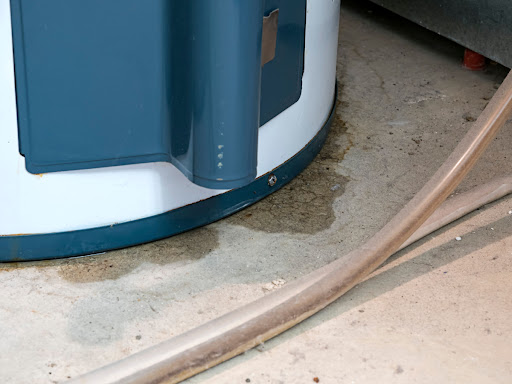
Repair usually makes sense when the tank is sound, the fault is isolated, parts are available, and the expected remaining life justifies the cost. Replacement becomes more reasonable with a leaking storage tank, repeated failures, major incompatibility, or changing household needs. Diagnose the exact failure before comparing options.
Start with the failure, not the age alone
Age is a useful planning factor, but it does not reveal why hot water is unavailable. A control, heating element, valve, sensor, venting issue, connection leak, or damaged tank can produce different symptoms and different safety implications.
Do not open gas or electrical compartments, defeat a safety control, cap a temperature-and-pressure relief valve, or repeatedly reset equipment. Record the model, serial number, error code, leak location, and symptom from a safe position.
Repair indicators
A repair may be reasonable when:
- the tank or heat exchanger is confirmed sound;
- the failed component is serviceable and available;
- the equipment was otherwise meeting household needs;
- the repair does not conceal a venting, combustion, electrical, or pressure problem;
- warranty coverage or parts availability improves the economics; and
- the expected remaining service justifies the total repair cost.
Replacement indicators
Replacement deserves stronger consideration when:
- the storage tank itself leaks;
- corrosion or repeated leakage affects multiple components;
- failures are recurring and cumulative repair cost is rising;
- capacity or recovery no longer fits the household;
- venting, fuel, electrical, drain, or location requirements make the existing setup unsuitable; or
- a planned efficiency upgrade has a sound total-cost case.
DOE's consumer guide gives general service-life ranges of roughly 10–15 years for storage water heaters and 20 years or more for tankless units. Those are planning ranges, not a diagnosis or guarantee for a particular appliance.
Compare the full decision
| Factor | Repair question | Replacement question |
|---|---|---|
| Failure | Is it isolated and safely replaceable? | Is the vessel or core system compromised? |
| Age/condition | Is meaningful service life likely to remain? | Are corrosion and failures accumulating? |
| Warranty | Are parts/labor covered? | What coverage begins with the new unit? |
| Household fit | Did capacity and recovery meet demand? | Should size, fuel, or technology change? |
| Installation | Can the repair preserve a compliant system? | What vent, electrical, gas, drain, pan, or permit work is required? |
| Operating cost | Will repair preserve inefficient operation? | Is modeled savings worth the installed premium? |
Efficiency claims need a product-level comparison
Compare the EnergyGuide label and certified performance for actual candidate models. A heat pump water heater can be substantially more efficient than a conventional electric-resistance unit, but space, temperature, condensate, electrical capacity, noise, and household demand affect fit. Tankless equipment changes recovery and installation requirements; it is not automatically the lowest-cost choice.
Questions to ask for a written option comparison
- What exact component failed, and how was that verified?
- Is the tank or heat exchanger sound?
- What does the repair include, and what could remain unresolved?
- Which warranties apply to repair and replacement?
- What code, venting, electrical, fuel, drain, pan, or permit work is included?
- What model and capacity assumptions support the replacement option?
- What is excluded from the quoted scope?
Aberle's water heater repair service explains repair options. The water heater service options page covers the full range of service options.
Primary references
Sources used for this guide
Common questions
Questions Houston homeowners ask
Does age alone mean a water heater should be replaced?
No. Age affects risk and parts decisions, but the failure, tank condition, installation, warranty, household demand, and repair scope should be evaluated together.
Can every water-heater leak be repaired?
No. Some valve or connection leaks may be repairable; a leaking storage tank generally requires replacement. The source must be confirmed first.
What should a repair-versus-replacement estimate include?
Ask for the diagnosis, repair scope, replacement scope, related code or infrastructure work, warranties, exclusions, and the assumptions behind any efficiency claim.