
The short answer
What Houston homeowners should know first
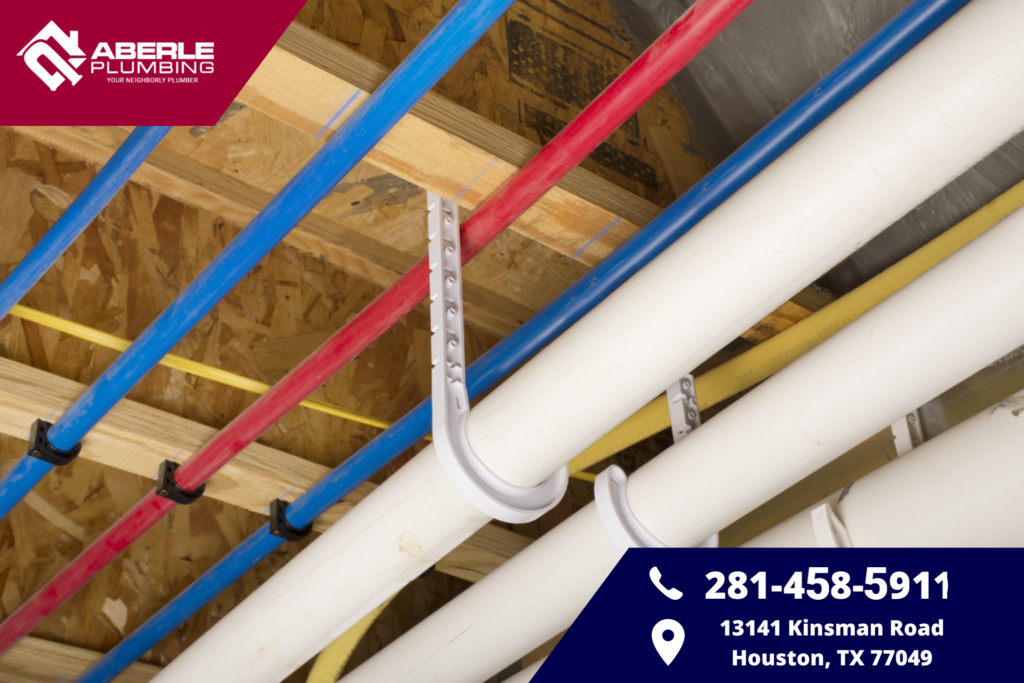
Expansion PEX is a flexible cross-linked polyethylene piping system joined with an expansion tool, compatible rings, and approved fittings. It can reduce the number of directional fittings and simplify routing, but performance still depends on system compatibility, sizing, support, protection, local requirements, water conditions, and installation quality.
How an expansion connection works
In an expansion system, a compatible sleeve and pipe end are expanded, an approved fitting is inserted, and the material returns toward its original dimension to form the connection. Pipe, rings, fittings, and tools are not automatically interchangeable. The installed assembly must follow the system listing and manufacturer's current instructions.
That distinction matters because “PEX” describes a family of materials and connection methods, not one universal installation. A good proposal should name the system, connection type, fitting material, sizing basis, and warranty conditions.
Practical advantages
- Flexible routing: Long runs can often bend around obstacles, reducing some elbows.
- Fewer concealed joints: Thoughtful layouts may reduce connections inside finished assemblies.
- Corrosion behavior: PEX does not rust like metallic pipe, though fittings and connected equipment still have their own material considerations.
- Installation access: Flexibility can make some retrofit routes less invasive.
- System design options: Manifold or trunk-and-branch layouts can be selected around the home's needs.
These are possible design advantages, not a guarantee that every home will use less material, deliver hot water faster, or cost less.
Limits a repiping plan must address
| Design question | Why it matters |
|---|---|
| Pipe and fitting compatibility | Mixed or unlisted components can undermine the approved system |
| Sizing and developed length | Undersizing can affect simultaneous fixture performance |
| Support and bend radius | Poor routing can stress pipe or create noise and abrasion |
| UV and heat exposure | PEX must be stored and installed within manufacturer limits |
| Penetration protection | Sleeves, nail plates, and firestopping protect concealed runs |
| Water chemistry and recirculation | Product-specific limits may affect material selection and warranty |
| Future service access | Valves, manifolds, and key connections should be reachable |
Expansion PEX versus other common options
Expansion PEX versus crimp/clamp PEX
Both can be valid listed systems. They use different fittings and tools and can have different internal fitting dimensions. The deciding question is not which label sounds better; it is whether the complete system is appropriate and installed to its listing.
PEX versus copper
Copper is rigid, familiar, and noncombustible, but it involves more fittings for routing and may be affected by particular water conditions. PEX is flexible and does not corrode like copper, yet it requires protection from sunlight, physical damage, and incompatible conditions. A home may use one material or a deliberate combination.
Questions to ask before a whole-house repipe
- Which exact pipe and fitting system is proposed?
- How was each branch sized?
- Where will shutoffs, manifolds, and transition points be located?
- How will pipe be protected at framing penetrations?
- What wall access and restoration are included or excluded?
- What pressure test and inspection records will be provided?
- What product and workmanship warranties apply, in writing?
For an assessment of the existing system and an installation plan, see Aberle's whole-house repiping options. The broader plumbing service overview can help route other supply, fixture, or leak concerns.
Primary references
Sources used for this guide
Common questions
Questions Houston homeowners ask
How is expansion PEX different from crimp PEX?
Expansion and crimp or clamp systems use different listed fittings, tools, and connection methods. The selected pipe and fitting system must be installed together according to its listing and instructions.
Can expansion PEX be used everywhere in a home?
No. Routing, support, UV exposure, temperature, protection, local requirements, and manufacturer limitations all affect where and how it can be used.
Is PEX always better than copper?
No. Each material has different installation, durability, water-quality, access, cost, and repair considerations. The existing building and complete repipe scope should drive the choice.